
Hurricane season is a fact of Florida life, and the best time to prepare is before it starts. The Florida Division of Emergency Management and the National Hurricane Center publish clear, practical guidance. Here it is, organized for older adults and the people who help them.
When the season runs
The National Hurricane Center says the official Atlantic hurricane season runs from June 1 to November 30. Storms sometimes form before and after those dates. The peak is around September 10, with most activity between mid-August and mid-October.
Build your kit
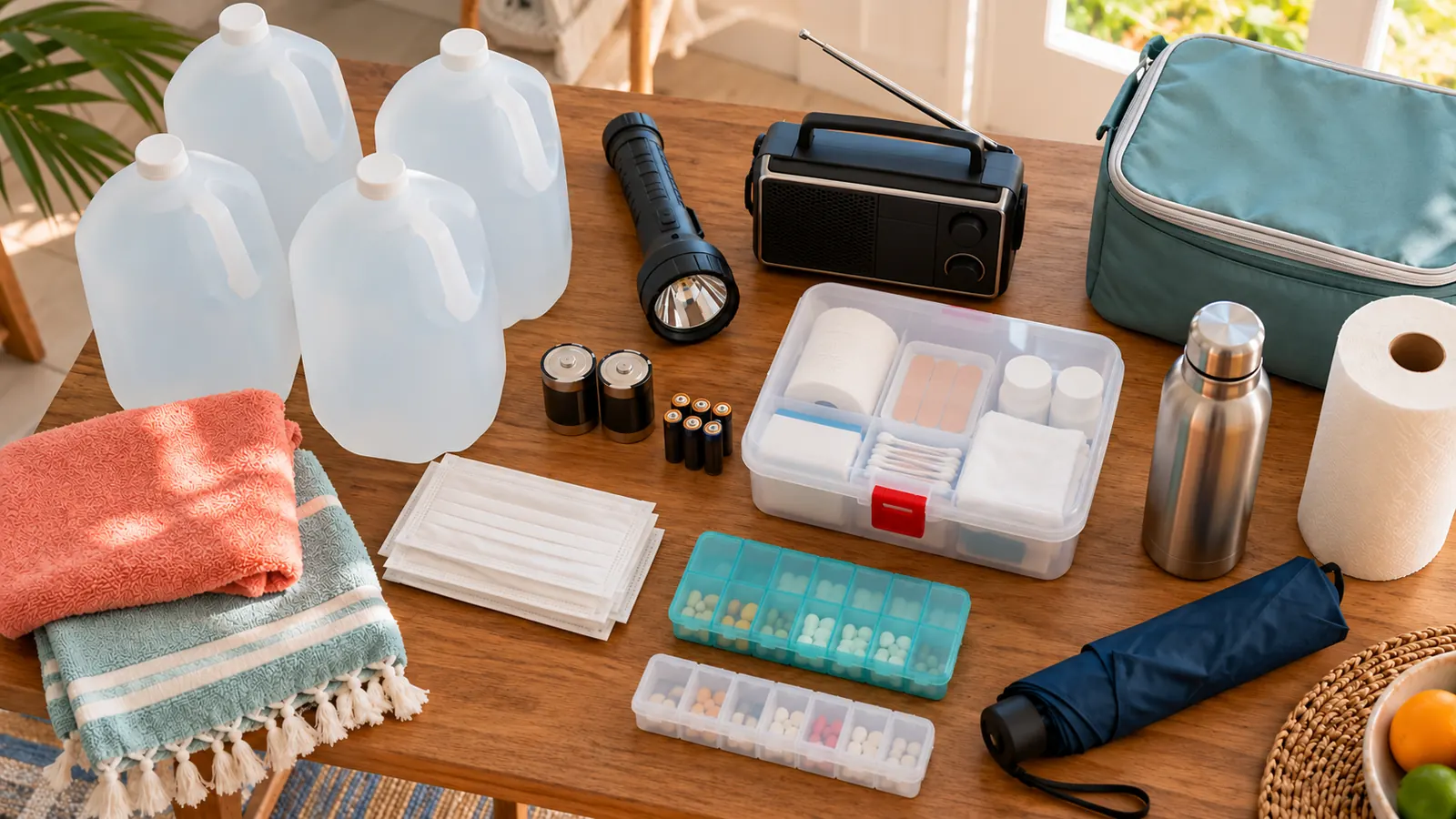
The division’s disaster supply kit checklist includes items every household needs and several that matter especially for seniors:
- Water: 1 gallon per person per day, and nonperishable food for at least 7 days, plus a non-electric can opener.
- A minimum two-week supply of medication and regularly used medical supplies, and a list of allergies.
- The style, serial number and manufacturer information for required medical devices.
- A battery-powered or hand-crank NOAA Weather Radio, flashlights and batteries. The checklist says not to use candles.
- Cash, since banks and ATMs may not be available after a storm, and cell phone chargers.
- Copies of insurance cards, medical records, banking information, Social Security cards and a will, kept in a waterproof container.
- A list of important phone numbers, including the county emergency management office, doctors and out-of-town contacts.
- Food, water and medications for pets for at least 7 days.
The checklist also suggests keeping your car’s gas tank full during the season, and packing rain gear, sturdy shoes or boots, work gloves and a first-aid kit with bandages, antiseptic, a thermometer and pain relievers.
Medications
The division calls having enough prescription medication one of the most critical preparations, and recommends a minimum two-week supply of everything you take, kept current and unexpired, plus a list of your medications and dosages. It also explains a Florida rule: you can get a 30-day refill of a prescription, even if you just refilled it, if your county is under a hurricane warning from the National Weather Service, under a state of emergency declared by the governor, or has activated its emergency operations center or plan. In those cases, insurers must waive refill-too-soon restrictions.
Tip: Ask your pharmacist in May whether your plan allows a 90-day supply. Starting the season with extra medication is easier than refilling during a warning.
Know your zone, know your home
The division says the greatest threat to life from a hurricane is storm surge flooding. Find out whether your address is in an evacuation zone; generally Zone A is the most vulnerable and is evacuated first. If you are in an ordered evacuation zone, a low-lying flood-prone area, a mobile home or an unsafe structure, follow evacuation orders. If you are not, it may be safer to stay home, provided the house can withstand strong winds and heavy rain. The division notes that homes built after 2002 generally include features that make them more resilient. Not every zone is ordered to evacuate in every storm, so listen to local officials rather than assuming.
Register if you will need help
Under section 252.355 of the Florida Statutes, the state, working with each county emergency management agency, maintains a registry of people who would need help during evacuation and sheltering because of physical, mental, cognitive or sensory disabilities. Home health agencies, hospices, nurse registries, medical equipment providers and others must help register people, and registration is renewed annually. Contact your county emergency management office or the Florida Department of Health’s special needs registry to sign up before a storm, not during one.
Run a generator safely
Generators save lives during long outages and take lives when misused. The division warns that generators produce deadly, invisible carbon monoxide. Its rules:
- Always run the generator outdoors, far from windows, doors and vents, never in a garage or basement.
- Keep it dry under a cover or canopy that still allows airflow.
- Turn it off and let it cool for at least 20 minutes before refueling.
- Use heavy-duty, outdoor-rated extension cords and do not overload it.
- Install battery-operated carbon monoxide alarms.
The division adds that a generator is especially worth planning for if you rely on medical equipment that needs continuous power.
Before the first storm
| When | What to do |
|---|---|
| Spring | Review insurance and buy flood coverage; it can take 30 days to start. |
| May | Restock the kit, refill medications, register with the special needs registry if needed. |
| When a storm forms | Fill the car, charge phones, check your zone and listen to local officials. |
Insurance is part of preparation; see Hurricane Insurance in Florida: Deductibles, Citizens and Free Wind Inspections Explained and Flood Zones and Flood Insurance in Florida: What Retirees Need to Know Before Buying.