
In Florida, a homeowners policy usually has two deductibles: a regular one for fires, theft and most other losses, and a separate, much larger hurricane deductible. Understanding that second number is the most important step in buying insurance for a retirement home here.
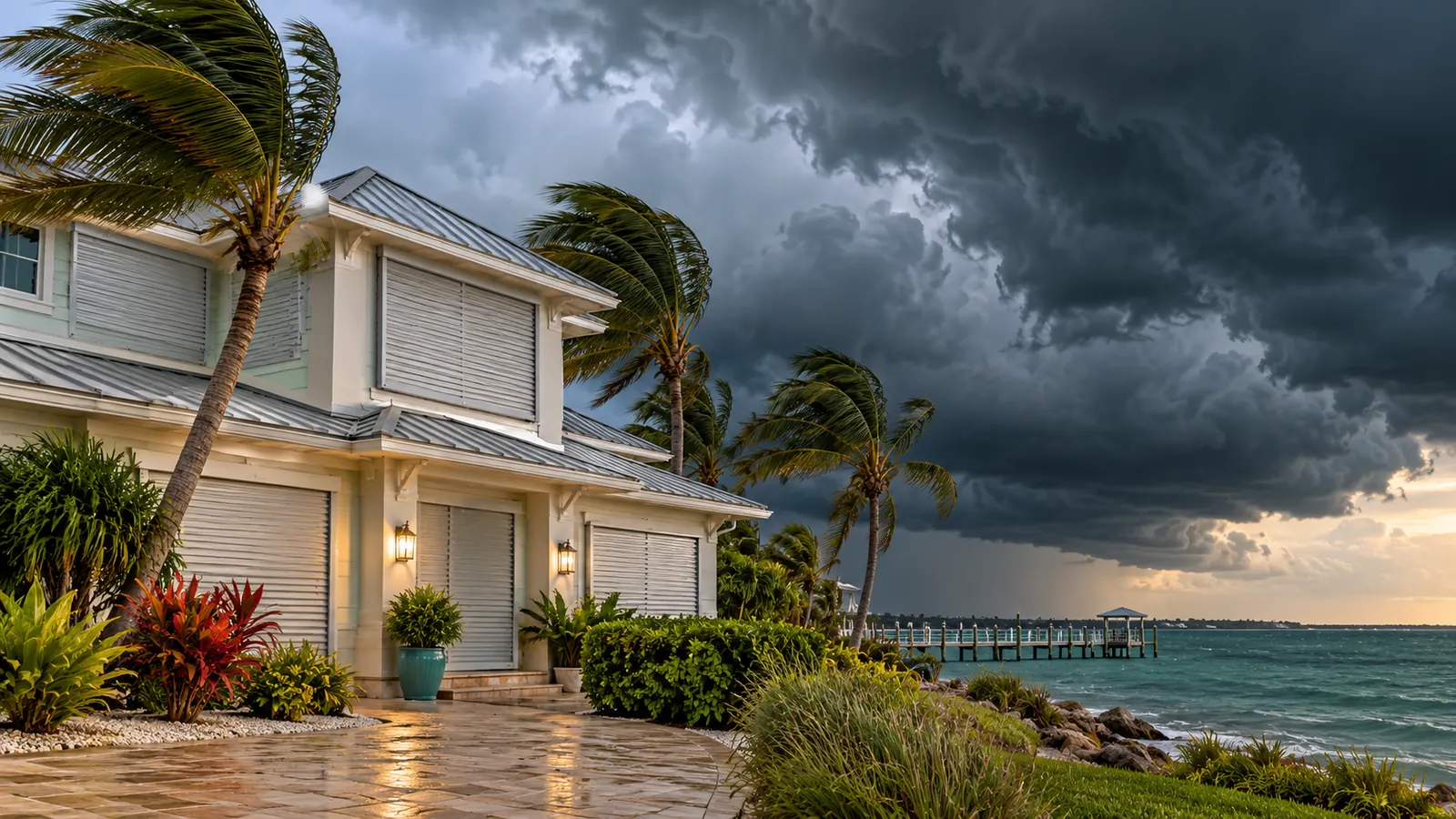
The hurricane deductible
Section 627.701 of the Florida Statutes requires insurers, before issuing a personal residential policy, to offer hurricane deductibles of $500, 2 percent, 5 percent and 10 percent of the dwelling limit, unless a percentage deductible would be less than $500. The written offer must say which deductible applies if you do not choose.
There are exceptions for larger homes. For dwelling limits of $250,000 or more, an insurer need not offer the $500 option. For limits of $1 million to $3 million, it may offer 3 percent instead of 2 percent, and above $3 million it need not offer 2 percent at all.
| Dwelling limit | 2% deductible | 5% deductible | 10% deductible |
|---|---|---|---|
| $200,000 | $4,000 | $10,000 | $20,000 |
| $300,000 | $6,000 | $15,000 | $30,000 |
| $400,000 | $8,000 | $20,000 | $40,000 |
The examples above are simple percentages of the dwelling limit, which is how the law defines these deductibles. They show why a lower premium with a 10 percent deductible can be a false saving for someone on a fixed income.
The warning on the policy
The law requires any policy with a separate hurricane deductible to carry, in boldfaced type of at least 18 points, the statement: “This policy contains a separate deductible for hurricane losses, which may result in high out-of-pocket expenses to you.” Insurers must also show the actual dollar amount of the hurricane deductible on the declarations page at issue and on renewal.
Citizens Property Insurance Corporation
Citizens is the state-created insurer under section 627.351(6). It is intended for property owners who cannot get coverage in the private market, and the law sets eligibility rules accordingly. For a new application on a primary residence, a home that is offered comparable coverage by an authorized private insurer is generally not eligible for Citizens unless that private premium is more than a set percentage above Citizens’ rate, and similar tests apply at renewal.
Citizens also has rules on flood. Under the same statute, Citizens requires its personal residential policyholders to carry flood insurance from another insurer, phased in by the home’s replacement cost: from January 1, 2024, for homes of $600,000 or more, 2025 for $500,000 or more, 2026 for $400,000 or more and January 1, 2027, for all others. Homes in FEMA’s special flood hazard areas were covered earlier. Policies without wind coverage and condominium unit owner policies are excluded.
Buy before a storm is on the map
Timing matters. Citizens states that it cannot accept new policies or policy changes for additional coverage once a tropical storm or hurricane watch or warning has been issued by the National Hurricane Center for any part of Florida. Shopping in winter or spring, well before the June 1 start of hurricane season, avoids being caught by such a pause.
My Safe Florida Home
The state’s My Safe Florida Home program offers free wind mitigation inspections and grants for approved upgrades such as roof improvements, impact windows and doors and garage door reinforcement. The program says the inspection report lists recommended improvements and the potential eligibility for up to $10,000 in grant funding, and that a quality wind mitigation inspection is the first step toward a stronger home and possible insurance savings.
Under section 215.5586, eligible homes must have a homestead exemption, be a dwelling with an insured value of $700,000 or less and have been built before January 1, 2008. Grants are generally matched at $1 from the homeowner for every $2 from the state, up to a maximum state contribution of $10,000; the statute exempts certain low-income homeowners from the match.
Tip: Ask your insurer how it uses a wind mitigation inspection report before you choose upgrades. The program’s grants cover roof improvements, impact windows and doors and garage door reinforcement.
How the program works
The program describes a step-by-step process: sign up in its online participant portal, answer a short survey about your home’s condition, and be placed in an inspection group, which the system assigns several times a week. Once assigned, you complete an inspection application with your home details and availability, and an authorized Florida wind mitigation inspector is assigned to your property. After the inspection, if your home qualifies, you can submit a grant application for approved upgrades.
Shopping for coverage
- Get quotes for the specific address; coastal location, roof age and construction matter.
- Compare the hurricane deductible in dollars, not percentages.
- Keep the deductible amount in savings during hurricane season.
- Buy flood insurance separately; see Flood Zones and Flood Insurance in Florida: What Retirees Need to Know Before Buying.
- Photograph your home and belongings before the season; see Hurricane Season Preparation for Florida Seniors: Kit, Medications, Zones and the Special Needs Registry.
Insurance is often the cost that surprises new Florida retirees most. Put it into your budget early, as described in The Cost of Living in Florida for Retirees: What Is Lower, What Is Higher and How to Budget.