
Florida’s Division of Emergency Management puts it bluntly: if it rains, it can flood. Flooding is the most common and most damaging natural disaster in the country, and in Florida the risk is higher because of frequent storms and the state’s closeness to water. Yet most insurance policies do not cover flooding. For a retiree buying a home, flood coverage deserves as much attention as the price.
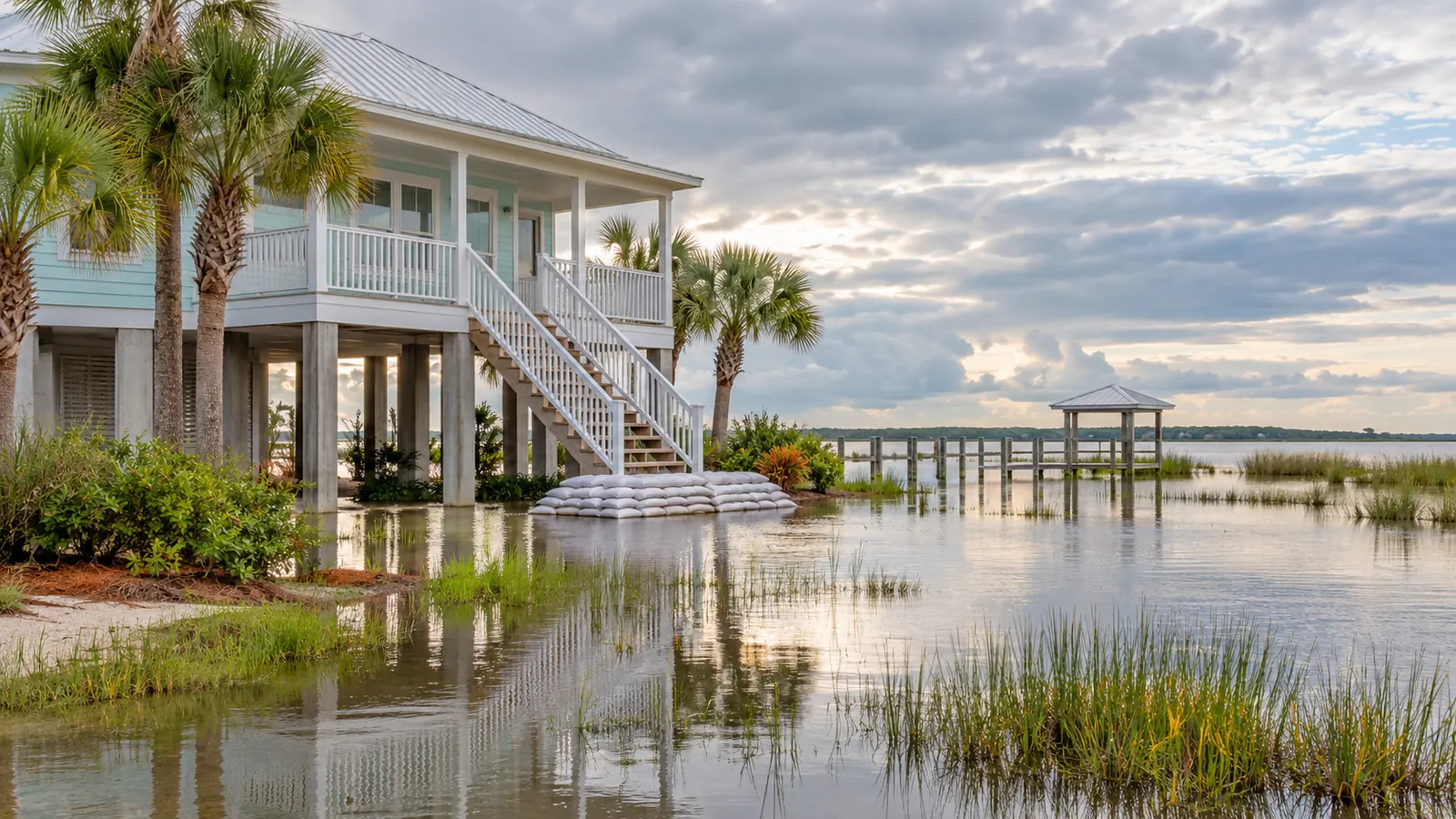
Your homeowners policy does not cover flood
The division’s flood pages repeat the same warning: flood damage is not usually covered by homeowners insurance, so do not make assumptions and check your policy. Flood insurance is a separate policy, available to homeowners, condo owners, business owners and renters. It is sold through the National Flood Insurance Program, which makes federally backed flood insurance available, and by private insurers.
Find the home’s flood risk
Before you buy, look up the address in three places:
- The official FEMA flood zone map, available online through FEMA’s Map Service Center or through the county property appraiser’s office.
- FEMA’s FloodSmart site, which gives an overall flood risk for an address.
- Your county’s evacuation zone map. The division describes the colored evacuation zones as flood zones, with Zone A the most vulnerable and first to evacuate.
The division adds that flooding is a coast-to-coast threat in Florida that can occur at any time of year, from storm surge, river flooding or heavy rainfall, and that low-lying or poorly drained areas raise the risk. Rain alone is a factor: NOAA’s 1991-2020 normals show about 67 to 68 inches a year at Miami and Pensacola, compared with about 40 inches at Key West.
Don’t wait for a storm to buy
You can buy flood insurance at any time, but the division warns that many policies take upwards of 30 days after purchase to take effect, so waiting until a hurricane threatens may be too late. Federal rules allow a few exceptions, such as coverage bought in connection with closing a mortgage loan, which can start at the loan closing.
Tip: If you are buying a home with a mortgage, set up flood coverage as part of the closing. Coverage tied to the loan can begin at closing instead of after a waiting period.
Citizens now requires flood coverage
If your homeowners policy is with Citizens Property Insurance Corporation, the state-created insurer, Florida law now requires you to carry flood insurance from another insurer as a condition of coverage. Section 627.351(6) of the Florida Statutes phases the requirement in by the home’s replacement cost:
| Policies effective on or after | Homes required to have flood coverage |
|---|---|
| January 1, 2024 | Dwelling replacement cost of $600,000 or more |
| January 1, 2025 | $500,000 or more |
| January 1, 2026 | $400,000 or more |
| January 1, 2027 | All other personal residential property insured by Citizens |
Homes in FEMA’s special flood hazard areas had to have flood coverage earlier: at issue for new policies from April 1, 2023, and by renewal for policies renewing on or after July 1, 2023. Policies that do not cover wind, and condominium unit owners policies, are exempt. The flood coverage must at least match the dwelling coverage available from the National Flood Insurance Program or meet the state’s private flood insurance standards.
Where to compare policies
The division points to three resources: FEMA’s FloodSmart site for buying and renewing flood insurance and understanding flood zones and costs, the Florida Office of Insurance Regulation’s flood insurance page for private flood insurance options, and Ready.gov for flood safety. Prices vary with the risk at your location and the provider you choose, so compare more than one quote.
Federal disaster aid is not a substitute
The division points out that if your property floods, federal assistance is not guaranteed. Without a Presidential Disaster Declaration for your area, you will not receive FEMA assistance. Insurance pays regardless of whether a disaster is declared, as long as the loss is covered.
Prepare for a claim now
The division recommends keeping updated photos of your home and belongings before a disaster, and after a flood, taking extensive photos of the damage before cleaning up so the insurer can compare before and after. It defines a flooding event for insurance purposes as flooding that affects two or more acres of land or two or more properties.
Staying safe when water rises
The division’s flood safety advice is short: know whether floodwater could reach your home, evacuate immediately if advised, never drive through flooded roads, since nearly half of all people killed in floods are those who try, and throw out food that touched floodwater. Hurricane-season planning is in Hurricane Season Preparation for Florida Seniors: Kit, Medications, Zones and the Special Needs Registry, and how flood coverage fits a budget is in Hurricane Insurance in Florida: Deductibles, Citizens and Free Wind Inspections Explained.