
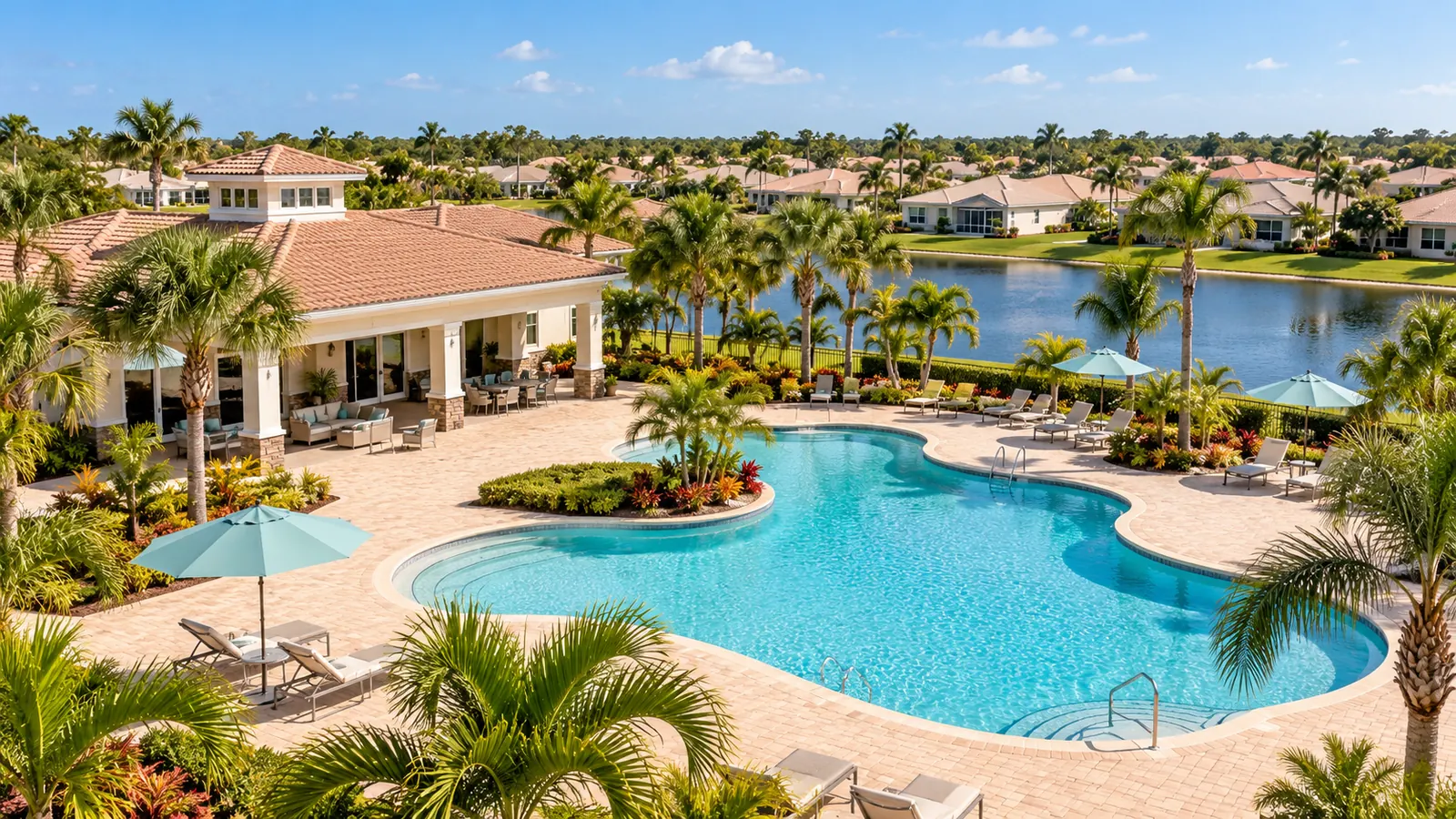
Florida has many communities built for people 55 and older, from small mobile home parks to large master-planned towns. They are allowed to limit who lives there because of a specific exemption in federal and Florida fair housing law. Knowing how that exemption works, and how these communities are governed and financed, helps you compare them on more than amenities.
How a community qualifies as 55-plus
Federal fair housing rules, at 24 CFR 100.304, exempt housing intended and operated for persons 55 years of age or older from the familial status protections, if the community meets a set of conditions. The rule defines a housing facility or community broadly: a condominium or cooperative, a property governed by a homeowners or resident association, a mobile home park or a manufactured housing community, among others. Florida’s own fair housing law, section 760.29 of the Florida Statutes, contains a parallel exemption.
The 80 percent rule
Under 24 CFR 100.305, at least 80 percent of a community’s occupied units must be occupied by at least one person 55 or older. Section 760.29 sets the same 80 percent test. That leaves up to 20 percent of units that may be occupied without anyone 55 or older, which is why some communities allow younger buyers and others restrict sales by their own rules.
The federal rule fills in details that matter to residents. A unit counts as occupied if someone actually lives there, or if it is temporarily vacant but its primary occupant lived there during the past year and intends to return periodically, which covers seasonal residents. Newly built communities need not meet the 80 percent test until at least 25 percent of units are occupied. Florida’s statute adds that the community must publish and follow policies and procedures that show its intent to operate as housing for people 55 and older.
Proving it
The community must be able to verify compliance through reliable surveys and affidavits, under 24 CFR 100.307, and update its occupancy information at least once every two years. Acceptable proof of age includes a driver’s license, birth certificate, passport, military ID or a certification in a lease or application.
Key takeaways
- Ask for the community’s most recent age-verification survey.
- Read the governing documents for any stricter age or guest rules.
- Check whether the home is inside a community development district.
Homeowners associations: your right to see the books
Most of these communities are run by a homeowners association governed by chapter 720 of the Florida Statutes. Section 720.303 requires the association to prepare an annual budget that sets out its operating expenses. It must keep official records in Florida for at least 7 years and make them available to a parcel owner for inspection or copying within 10 business days after receiving a written request. If the association fails to provide access within 10 business days of a request sent by certified mail, the law creates a presumption that it willfully failed to comply.
As a prospective buyer, ask the seller or the association for the current budget, the most recent financial report, the rules and any planned special assessments. Once you own, use your records right to keep an eye on reserves and spending.
Community development districts
Some large Florida communities are inside a community development district, or CDD. Section 190.003 defines a CDD as a local unit of special-purpose government created to deliver urban community development services. Districts can finance infrastructure, and their charges often appear as non-ad valorem assessments collected with your property tax bill.
Section 190.009 requires a district to take affirmative steps to fully disclose information about the public financing and maintenance of improvements, and to make it available to all existing and prospective residents. Developers must give that information to initial purchasers, and include it in a public offering statement when one is required.
Look at the property tax bill for the specific home, not just the HOA dues. CDD assessments show up there, and they can be a significant part of the yearly cost.
Questions to ask before you buy
- Does the community operate as housing for older persons, can it show its latest age survey, and what do its rules say about younger residents and long-term guests?
- What are the HOA dues, and what do they cover?
- Is there a CDD, and what is the annual assessment?
- Are any special assessments planned?
- How is the community governed, and when are meetings held?
Fitting it into the budget
Community fees sit alongside property tax, insurance and flood coverage in a Florida housing budget. Compare the total, not just the monthly dues; see The Cost of Living in Florida for Retirees: What Is Lower, What Is Higher and How to Budget and Choosing a Florida Town for Retirement on a Budget: Climate and Costs Region by Region.